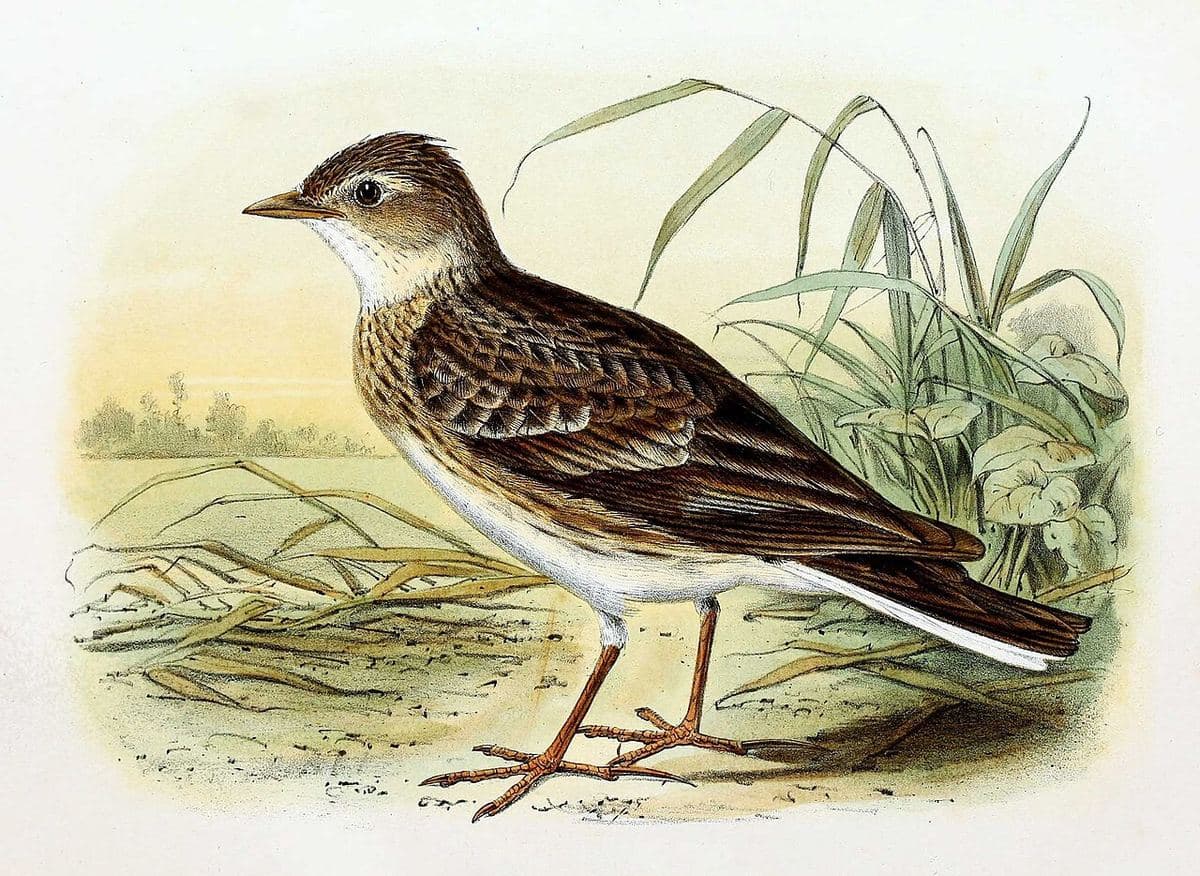

Eurasian skylark
kairaka · Alauda arvensis
Found on open grassy ground, singing high overhead in spring.
Story
British settlers loved the skylark, and more than 1,000 were released between 1864 and 1879. By the early 1900s, farmers ranked it second only to sparrows for crop damage.
Behaviour
Males climb steeply as they sing, to 30–100 m, then hover and sing for three to five minutes before parachuting down, still singing. Nests in a grass-lined cup on the ground.