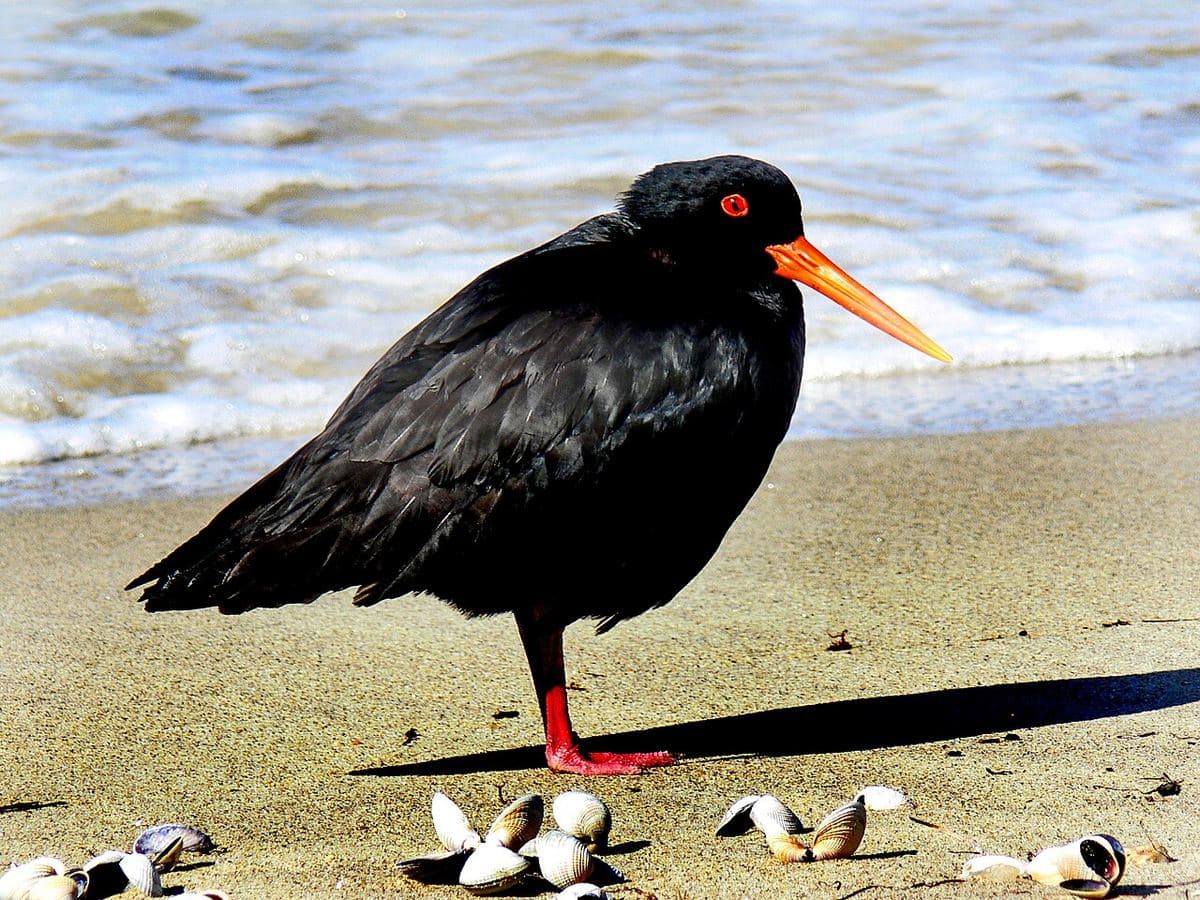

Variable oystercatcher
tōrea pango · Haematopus unicolor
Commonly seen on rocky shores at low tide, working the oyster-covered rocks.
Story
Once shot for food, variable oystercatchers were protected in 1922 and have been recovering ever since, from about 2,000 in the early 1970s to 6,000–7,000 today. Auckland and Northland are strongholds.
Behaviour
Pairs hold their territory year-round, piping loudly at intruders and dive-bombing people who get near chicks. Unusually for waders, the parents bring food to chicks hidden under rocks or plants. On Kawau they drill rock oysters.